Expanding into new markets: What Entrepreneurs need to get right

Before entering a new market, there are three questions every entrepreneur should ask:
- Does the business already work at home?
- Is there a real market, or just a need?
- Am I making a strategic move, or simply following the crowd?
For entrepreneurs looking to expand beyond their home markets, the answers can make the difference between a successful expansion and an expensive detour.
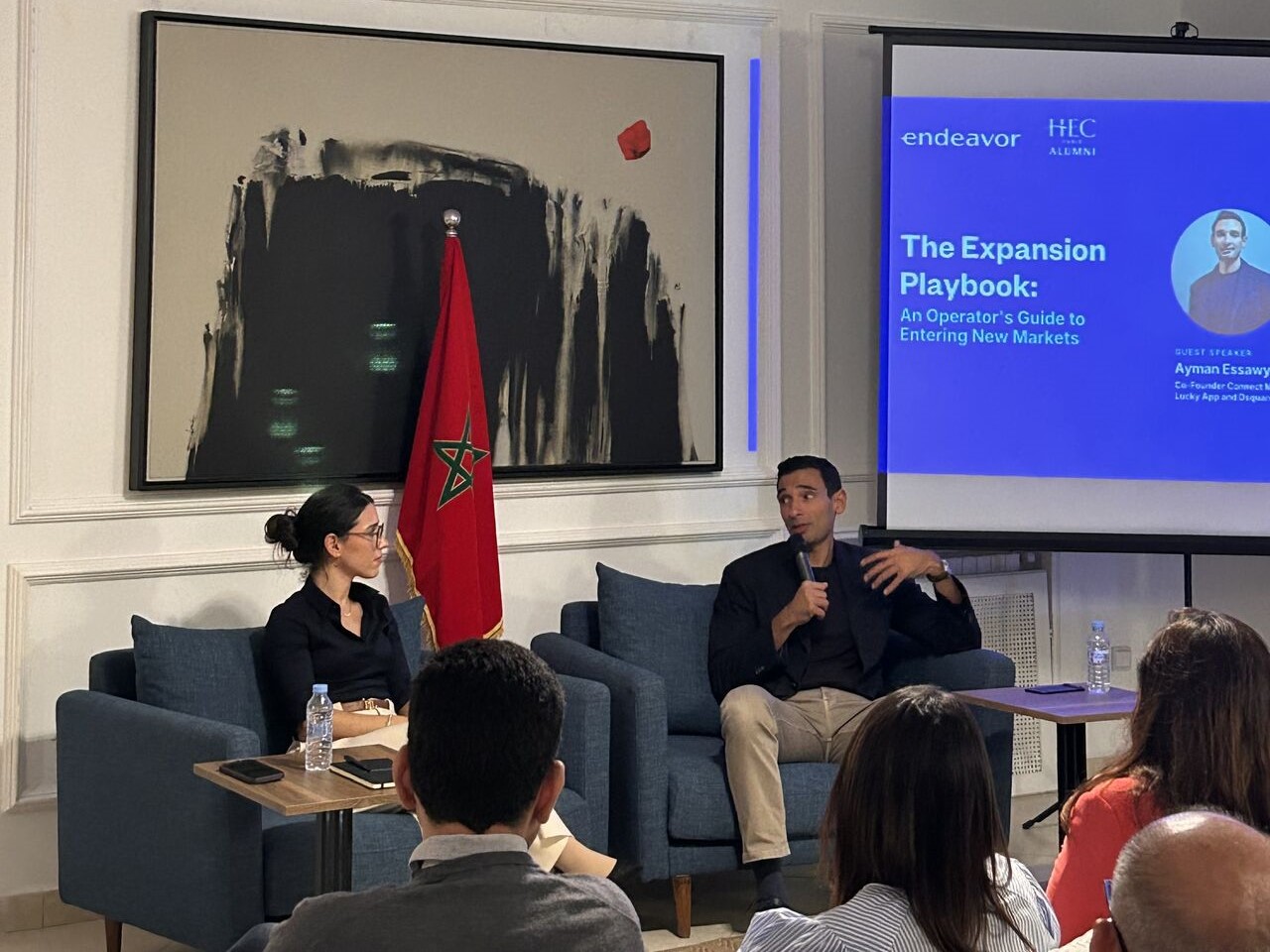
At the first session of our panel series, organised in partnership with HEC Paris Alumni Maroc, Egyptian Endeavor Entrepreneur Ayman Essawy shared how he approaches these decisions, drawing on his experience building and expanding businesses across several markets.
Ayman is the founder of Dsquares, Lucky App and Connect Money, as well as an investor and mentor. Having taken his businesses across the Middle East and Africa, he is now preparing to bring Connect Money, his third venture, to Morocco. His experience offers a practical perspective on what it takes to enter a new market, when to move forward and, just as importantly, when to walk away.
Make it work at home first
For Ayman, expanding into a new market should come only after a business has proven that it can stand on its own at home. And that means more than finding product-market fit or generating revenue. It means building a business that can sustain itself when conditions become difficult.
Egypt gave him a clear example of what that requires. The currency devaluation in 2022 and 2023 put significant pressure on companies that had raised capital in US dollars but were still expected to deliver financial results in the same currency. As the local currency lost value, meeting those expectations became increasingly difficult, putting their business models to the test.
For Ayman, this is why building a company takes time. He estimates that it takes around seven to eight years to establish a business in the region. That period is about more than growing revenue; it’s about proving the model, understanding the market and building a business that can sustain itself. Only then do entrepreneurs have the flexibility to consider their next move: continue growing, pursue an exit, acquire another business, merge, change direction or even build a new company that supports the first.
And proving the model is not a one-time exercise. Ayman reassesses his business model every three to six months, particularly as market conditions evolve. One of the risks he sees across the region is entrepreneurs prioritising hypergrowth before establishing sound unit economics.
The point is simple: before taking a business into another market, make sure you have built something that can stand on its own in the first one.
Need is not a market
Once the business is ready, the next challenge is choosing where to go. And for Ayman, identifying a need is not enough.
Take financial services. Across East Africa, Central Africa and other parts of the continent, there is a clear need for better access to financial services. But a large unmet need does not automatically translate into a viable business opportunity.
What matters is having a credible way into the market, with the right infrastructure, partnerships and access to customers.
Ayman looks at three possible entry points:
- A major B2B contract: A large agreement with a business, such as a telecom operator, can provide an entry point. But the contract alone is not enough; access to the infrastructure and network behind it matters just as much.
- A market similar to your own: Familiar market dynamics can make it easier to transfer experience and build the right connections.
- An acquisition: Buying a local company can provide an established presence, relationships and a faster route into the market.
His experience in Romania illustrates why the distinction matters. His team secured a contract with the country’s leading telecom operator. Yet the relationship did not translate into broader market access. Without the network and connections needed to reach other customers, the business remained limited to one or two accounts.
Kenya and Tanzania offered a different experience. There, an existing partner and the infrastructure it had built made expansion possible. As Ayman explained, without that support, his team could not have entered those markets in the same way.
Adapt the use case, keep operations central
Choosing the right market is only part of the equation. Entrepreneurs also need to think about how they will operate once they get there. For Ayman, expanding into a new market does not mean starting from scratch. The key is knowing what needs to change to serve local customers and what can remain centralised.
Customer needs and behaviours differ from one market to another. Ayman noted that use cases generating 70–80% of revenue in Egypt might generate almost nothing elsewhere. A company therefore needs to understand local demand and adapt its offering rather than assume that what works at home will work everywhere.
But adapting the offering does not mean duplicating the entire organisation. Ayman advocates keeping as many operations as possible centralized rather than building a full team and infrastructure in every new market. He also highlighted Egypt’s cost advantage as an operating base: a company can run an office of 200 to 300 people there at a significantly lower cost than in many other markets across the region, and even globally.
The principle is to adapt the business to local customers without unnecessarily replicating the business behind it.
Don’t follow the crowd
Even with a business ready to expand and a market that appears attractive, one risk remains: making the decision because everyone else is doing it.
Ayman sees this happening among Egyptian entrepreneurs looking towards Saudi Arabia. When asked why they want to enter the market, some struggle to give a clear answer beyond the fact that other companies are going there.
His advice is straightforward: don’t follow the trend.
Ayman has seen many Egyptian companies enter Saudi Arabia over the past two years, only to eventually shut down their operations. The problem is not necessarily the market itself. It is entering without understanding whether the opportunity fits the company’s business model and capabilities.
Ayman recommends looking honestly at three factors: the home market, the company’s operating model and the target market. Getting one or two of these wrong can cost money and time, while also taking attention away from the business that already exists.
And when the signs are not there, entrepreneurs should be willing to recognise it early. Ayman believes you shouldn’t need one or two years to realise that a market isn’t working. The faster you assess the situation honestly, the sooner you can make the decision to return.
For him, disciplined expansion is not about entering as many markets as possible. It is about knowing which opportunities are worth pursuing.
Why Morocco is part of the plan
Morocco is an interesting example of this approach. For Connect Money, Ayman’s third venture, entering the country is not a reaction to a trend. It has been part of the company’s expansion plans for the past three years, alongside two or three other markets the team has been assessing.
He shared three reasons behind the decision.
Currency diversification. After the significant devaluation of the Egyptian pound, expanding into other markets can help companies reduce currency risk exposure. Ayman noted that this is not always openly discussed, but it is one of the factors influencing expansion decisions among Egyptian businesses.
A limited number of viable markets in Africa. Ayman explained that the number of African markets offering the right conditions for expansion is limited: “We don’t have 10 options.” Morocco is among the markets his team sees as a realistic opportunity.
A market where you can learn quickly. Morocco’s relatively close-knit business community makes it easier to meet people, build relationships, and better understand the market. For an entrepreneur who believes in testing an opportunity early, this is an advantage: you can find out sooner whether the market is right for your business.
That doesn’t mean he expects an immediate return. Ayman pointed out that fintech requires patience. Entrepreneurs entering the sector need to be prepared to spend two to three years building their presence before seeing meaningful results. He also sees the potential for Morocco to contribute around 30% to the company’s top line after four years of operations, a significant contribution given the market’s size.
His perspective is neither that Morocco is an easy market nor that every company should enter it. It is that Morocco deserves a place in a considered expansion strategy, provided the business understands the opportunity and is prepared to commit for the long term.
Expansion is easier with the right network
For Ayman, entering a new market is not something an entrepreneur has to figure out alone. He credits Endeavor with helping his businesses access at least three or four of the seven markets in which they operate.
That support has taken practical forms: navigating legal setup, finding the right lawyers, getting introductions to relevant stakeholders and building an initial business pipeline. In markets where Endeavor has an established presence, entrepreneurs can connect with the right people even before they arrive.
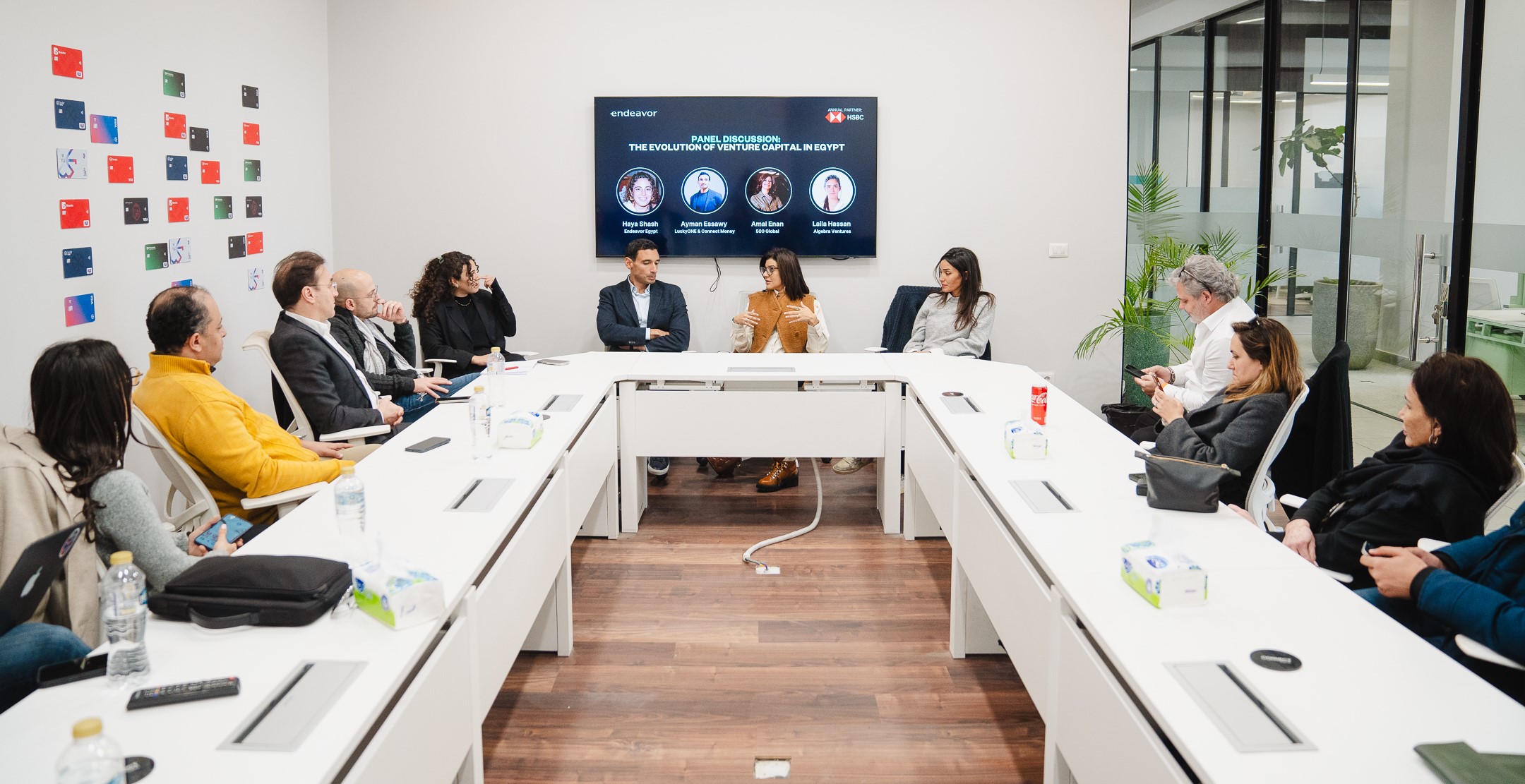
A workshop hosted at Connect Money’s offices during Endeavor Morocco’s Access to Markets visit to Cairo.
Egypt offers a strong example of what an established network can make possible. With nearly two decades of activity, Endeavor Egypt has helped build a connected community of entrepreneurs who share experience, support one another and create opportunities together. Ayman highlighted how this community has contributed to the growth of companies in the ecosystem, with Endeavor playing an important role in bringing entrepreneurs together.
This is what we call the Multiplier Effect: when entrepreneurs who have benefited from the network use their experience, relationships and success to help others grow. Through Endeavor’s global network, that support extends beyond individual markets, helping entrepreneurs access new connections and opportunities as they expand internationally.